
Polyester is one of the most common fabrics used in jackets, sportswear, backpacks, uniforms, and workwear. And despite what many people assume, iron-on patches work extremely well on polyester when they are applied with the right heat, pressure, and surface preparation.
Why polyester is sensitive to heatPolyester is a synthetic fiber made from thermoplastic polymers, meaning it can soften or melt when exposed to high heat. Unlike cotton, which tolerates higher temperatures, polyester requires controlled, low heat and a barrier between the iron and the fabric. Understanding how heat interacts with synthetic fibers is key to applying iron-on patches safely.
The key is understanding how polyester behaves under heat and how heat-activated adhesives bond to smooth synthetic fibres. This guide walks you through the full process so you can create a clean, durable bond without shine, warping, or lifting edges.
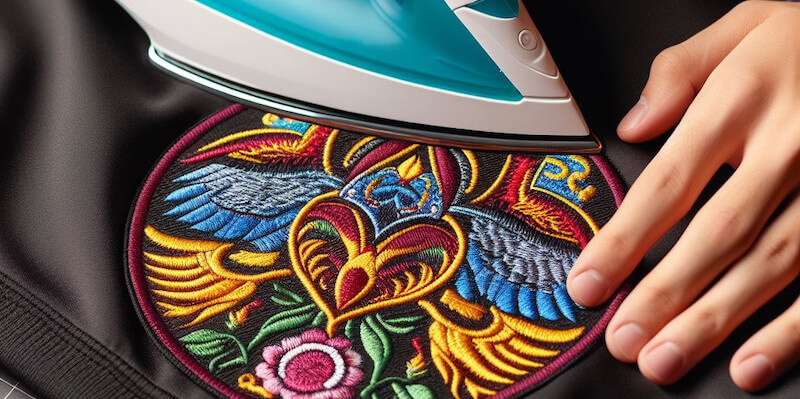
Choosing the Right Patch for Polyester
Not all iron-on patches use the same backing. For polyester, the goal is to use a patch that holds heat long enough for the adhesive to flow and bond.
Best options for polyester:
- Embroidered patches with heat-seal backing – thicker and excellent at holding heat
- Woven patches with heat-seal backing – flatter than embroidery but still very durable
Can also work (with good pressure):
- Printed patches – lighter weight, but may need extra pressing and cooling time
Always check that the patch specifies heat-activated adhesive and compatibility with synthetic fabrics or polyester.
Why Polyester Needs Controlled Heat
Polyester is a synthetic fibre made from thermoplastic polymers, which means it softens at lower temperatures than cotton. That doesn’t make it fragile, it just means it needs lower heat, a protective barrier, and consistent pressure.
Using too much heat can create shine or distortion, but using too little heat prevents the adhesive from fully activating. The goal is just enough heat for the glue to melt and flow into the backing without affecting the fabric surface.
Prepare the Fabric for a Strong Bond
A clean, flat surface is what allows the adhesive to grip polyester properly.
- Wash the garment with mild detergent (avoid fabric softener).
- Dry completely (air-dry or low heat).
- Flatten the area using low heat with a pressing cloth or parchment paper.
- Test a hidden area, especially on polyester blends like polyester-spandex.
Removing residues, moisture, and wrinkles ensures the adhesive makes full contact with the fabric.
Step-by-Step: Iron-On Patch to Polyester
- Set your iron to “polyester” or low heat (no steam).
- Pre-warm the fabric for about 5 seconds using a pressing cloth.
- Position the patch on the fabric and cover it with parchment paper or a pressing cloth.
- Press (do not slide) with firm pressure for 45–50 seconds.
- Check the edges — if any lift, apply focused heat and pressure for another 15–20 seconds.
- Turn the fabric inside out and press the reverse side for 30–40 seconds.
- Let everything cool completely without moving the fabric. The adhesive sets as it cools.
Optional: Using a Heat Press
A heat press provides more even temperature and pressure than a household iron. For polyester, use:
- Lower temperature
- Moderate pressure
- Short press time
Always follow the patch manufacturer’s guidelines and test on a hidden area first.
Why Patches Sometimes Lift on Polyester
If a patch peels later, it’s usually because:
- The adhesive never fully activated (not enough heat or time).
- Moisture or steam interfered with bonding.
- The fabric wasn’t flat or smooth during pressing.
Polyester doesn’t absorb adhesive like cotton, so pressure and cooling time matter more.
Caring for Patched Polyester
- Let the patch cool completely before wearing.
- Wait 24 hours before washing.
- Turn garments inside out when washing.
- Air dry or use low heat.
- Never iron directly over the patch without a pressing cloth.
Final Thoughts
Iron-on patches bond very well to polyester when applied as a controlled heat-and-pressure process. By using low heat, avoiding steam, protecting the fabric surface, and allowing proper cooling time, you can create a long-lasting, professional-looking result on jackets, uniforms, bags, and synthetic garments.